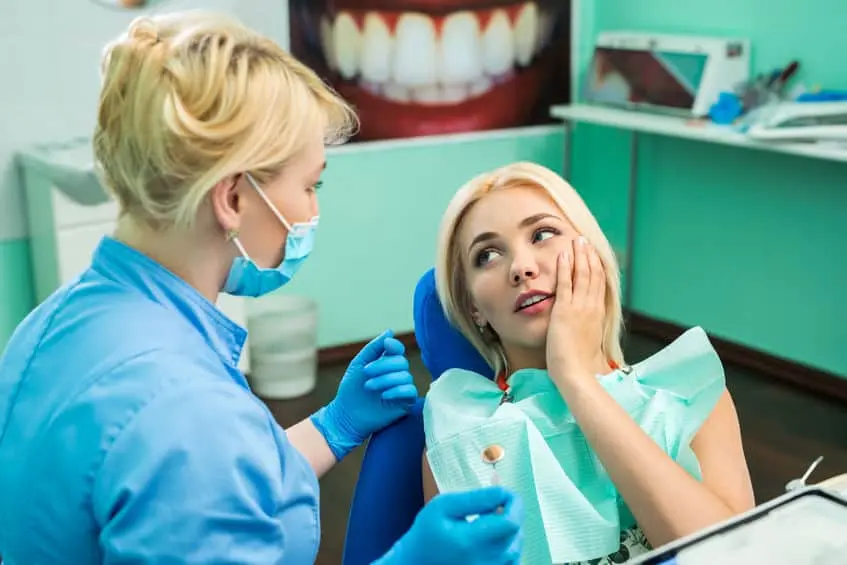
What to Do About a Toothache
What the different kinds of tooth pain usually mean, what genuinely helps in the meantime, and when it needs seeing today.
A toothache is a symptom, not a diagnosis, and what the pain feels like tells you a good deal about what is causing it. This page explains the common patterns and what to do tonight. It is not a substitute for having the tooth looked at, because no amount of reading identifies which tooth or how far it has gone.
Sharp Pain With Cold That Stops Quickly
A short sharp response to cold that goes away within a second or two is usually sensitivity rather than damage. It happens when the dentine underneath the enamel is exposed, generally through gum recession, enamel worn thin by grinding or brushing too hard, or a small area of early decay.
A desensitising toothpaste used consistently for a few weeks helps most cases. If it does not, or if it is only one tooth, have it looked at, because a single sensitive tooth is more likely to be something specific.

Pain That Lingers After Hot or Cold
This is the one to take seriously. If a hot drink or something cold causes pain that carries on for thirty seconds or several minutes after the stimulus has gone, the pulp inside the tooth is inflamed rather than merely exposed.
That degree of inflammation does not reverse on its own. It usually means the tooth needs root canal treatment, and treating it sooner is both more comfortable and more likely to save the tooth.
Deep Throbbing That Wakes You Up
Constant throbbing, worse when you lie down, generally means the pulp is infected and pressure is building inside a tooth with nowhere for it to go.
Propping your head up helps because it lowers that pressure. Over-the-counter pain relief taken as directed helps. Neither fixes it. This is the pattern that most often ends in an abscess if it is left, so call (918) 355-1391.
Sharp Pain When You Bite Down, or When You Let Go
Pain on biting has two common causes and they need different answers.
If it started after recent dental work, the filling or crown may simply be fractionally high, so that tooth takes the whole force of your bite. That is a five-minute adjustment and you should not put up with it.
If there has been no recent work, particularly when the pain comes as you release the bite rather than as you press down, think cracked tooth. Cracks are often invisible on an X-ray and can be missed unless someone is looking for them. Caught while the crack is above the gum, a crown usually saves the tooth. Once it extends into the root, it generally cannot be saved. That window is worth acting inside.
Dull Ache With Pressure Around the Sinuses
If several upper back teeth ache at once, the pain changes when you bend forward, and you have a cold or allergies, this is often sinus pressure rather than a dental problem. The roots of the upper molars sit close to the sinus floor.
It usually settles as the congestion does. If it does not, or if it is one tooth rather than several, have it checked.
Swelling of the Face or Gum
Swelling means infection has spread beyond the tooth. A small bump on the gum beside a tooth is a sinus tract draining an abscess, and it often comes with relief from the pain because the pressure has found a way out. That relief is not recovery.
Swelling in the face needs seeing urgently. If it is spreading towards your eye or under your jaw, or you have a fever, difficulty swallowing or difficulty breathing, go to an emergency room. That is not something to wait on.
What Actually Helps Tonight
Take over-the-counter pain relief as directed on the packet. Rinse with warm salt water. Use a cold compress on the outside of the face, not on the tooth. Sleep with your head propped up. Avoid very hot, very cold and very sweet things, and chew on the other side.
Do not put aspirin against the gum, do not poke at it with anything sharp, and do not apply heat to a swollen face, because heat encourages infection to spread.
Call (918) 355-1391 and describe what you are feeling. It tells us how urgently to fit you in.

Toothache Questions
Why does my toothache get worse at night?+
Lying flat increases blood pressure in your head, and that raises the pressure inside an already inflamed tooth. There are also fewer distractions. Propping your head up on an extra pillow genuinely helps, and it is the simplest thing to try first.
The pain stopped on its own. Do I still need to come in?+
Yes. Severe tooth pain that disappears suddenly usually means the nerve inside the tooth has died rather than recovered. The infection does not go away with the pain; it carries on quietly and generally returns later as an abscess or facial swelling.
Can I put aspirin on the tooth?+
No. Aspirin held against the gum burns the tissue and causes a chemical ulcer, and it does nothing for the tooth because pain relief works through the bloodstream. Swallow it instead.
When is a toothache an emergency?+
Facial swelling, fever, difficulty swallowing or breathing, or pain that is not controlled by over-the-counter medication all mean you should be seen straight away. Swelling spreading towards the eye or under the jaw needs an emergency room rather than a dental appointment.
Get the Tooth Looked At
Describe the pain when you call and the front desk will work out how urgently you need to be seen.