
Skip to content Call Us: (918) 355-1391

A crown covers a tooth completely, restoring its shape and holding what remains of it together. At Dentistry For You in Broken Arrow we fit porcelain and all-ceramic crowns for teeth that are cracked, heavily filled, worn down or have had root canal treatment.

When a Tooth Needs Covering

A filling sits inside a tooth and relies on the walls around it for support. A crown does the opposite: it wraps the outside and holds those walls in. That difference is why a crown is the answer once a tooth has lost too much structure.

The usual reasons are a crack, a very large old filling with thin walls left around it, a tooth worn low by grinding, a tooth that has had root canal treatment, or a fracture that has taken off a cusp.
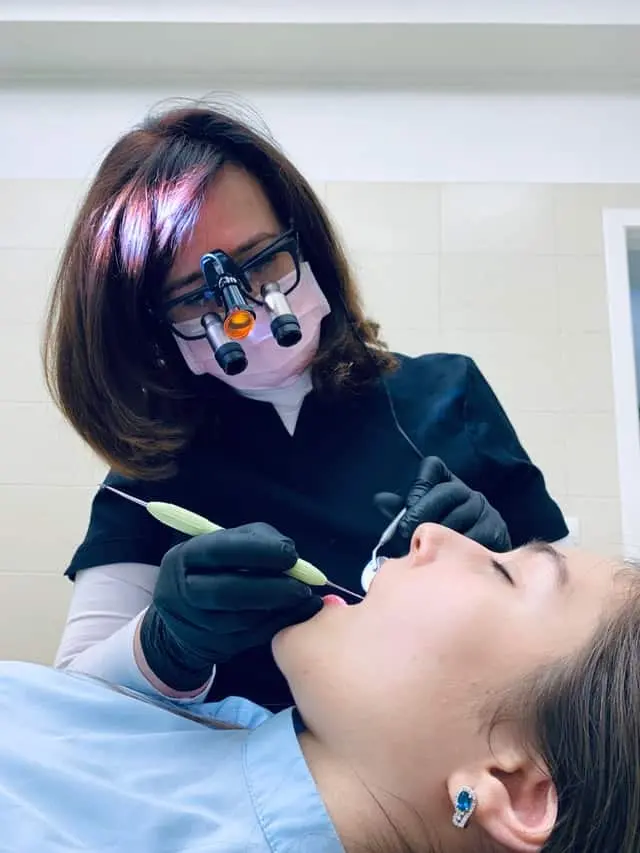
A porcelain crown being fitted

Cracked Teeth

Cracked teeth deserve a paragraph of their own because they are easy to ignore. The classic symptom is a sharp pain on releasing a bite rather than on pressing down, and often it only happens with certain foods at certain angles. There may be nothing visible and nothing on an X-ray, because a crack running vertically is invisible from the direction an X-ray travels.

A crack behaves like one in a windscreen: it spreads. Caught while it is confined to the crown of the tooth, a crown holds it together and the tooth is saved. Once it runs below the gum and into the root, the tooth usually cannot be kept. The gap between those two outcomes is often only a few months, which is why a tooth that hurts on biting is worth looking at now rather than at your next checkup.

Has a Tooth Cracked?

Call the front desk and we will find you a time that works.

The Appointments

Crowns normally take two visits.

At the first, the tooth is numbed and any decay or failing filling is removed. If a lot of structure is missing, a core is built up so there is something solid for the crown to grip. The tooth is then shaped down by roughly the thickness of the crown that will cover it. We take impressions, choose the shade, and fit a temporary crown.

The permanent crown is made in a laboratory, which takes a couple of weeks. At the second visit the temporary comes off, the new crown is tried in, and we check the fit, the contact with the neighbouring teeth, the shade and the bite before anything is cemented. Once it is right, it is cemented permanently.

Living With a Temporary

Temporary crowns are held on with soft cement so they can be removed easily, which also means they come off more easily than you would like. Avoid anything sticky, chew on the other side, and when flossing that tooth, slide the floss out sideways rather than pulling it back up.

If it does come off, keep it and call us. It is not painful in itself, but the prepared tooth is sensitive and the neighbours can shift enough in a few days to stop the permanent crown seating.

Materials

All-ceramic crowns have no metal in them, so no grey line appears at the gum as it recedes and light passes through them much as it does through enamel. Zirconia is the stronger option and suits molars and grinders. Lithium disilicate has better optical qualities and suits front teeth. More detail is on the metal-free dentistry page.

Looking After a Crown

The crown cannot decay. The tooth underneath it can, and the margin where the two meet is the vulnerable line. Brush it like any other tooth and clean between the teeth every day.

If you grind, ask about a night guard. Grinding is the most common reason crowns chip or come loose early. Call (918) 355-1391 to book.

Questions About Crowns

How long does a crown last?

Ten to fifteen years is typical and many last considerably longer. What shortens that is decay at the margin where the crown meets the tooth, grinding, and gum disease. The crown itself does not decay, but the tooth underneath still can.

Why do I need a crown after a root canal?

A root-treated tooth has had its inner tissue removed and is more brittle than a living tooth, so it fractures more easily under normal chewing. A crown holds the remaining structure together. Skipping it is the most common reason a successful root canal ends in extraction a few years later.

What is the difference between a crown and a veneer?

A veneer covers only the front surface and is for appearance. A crown covers the whole tooth and is structural. If a tooth is cracked or heavily filled it needs a crown, because a veneer would leave the weak parts unsupported.

My temporary crown came off. Is that an emergency?

It is not dangerous but it does need dealing with, because the prepared tooth is sensitive and the neighbouring teeth can drift enough to stop the permanent crown fitting. Keep the temporary if you can find it and call (918) 355-1391.

Book a Crown Consultation

A cracked tooth treated early can usually be saved. Left alone, the crack spreads.